Capture references
Photographed the subject from multiple angles to give FaceBuilder sufficient facial reference.
NTU · Emerging-media R&D
A technical exploration of lifelike digital presenters—moving from reference photography to an animatable MetaHuman inside Unreal Engine.
The exploration
At NTU, I explored an early MetaHuman pipeline as emerging-media research for learning and communications. The idea was to test whether a realistic, reusable presenter could support content updates and new formats without rebuilding every scene from scratch.
This was not only an avatar-design exercise. It joined facial reconstruction, 3D workflows, real-time rendering and performance capture into one end-to-end production test.
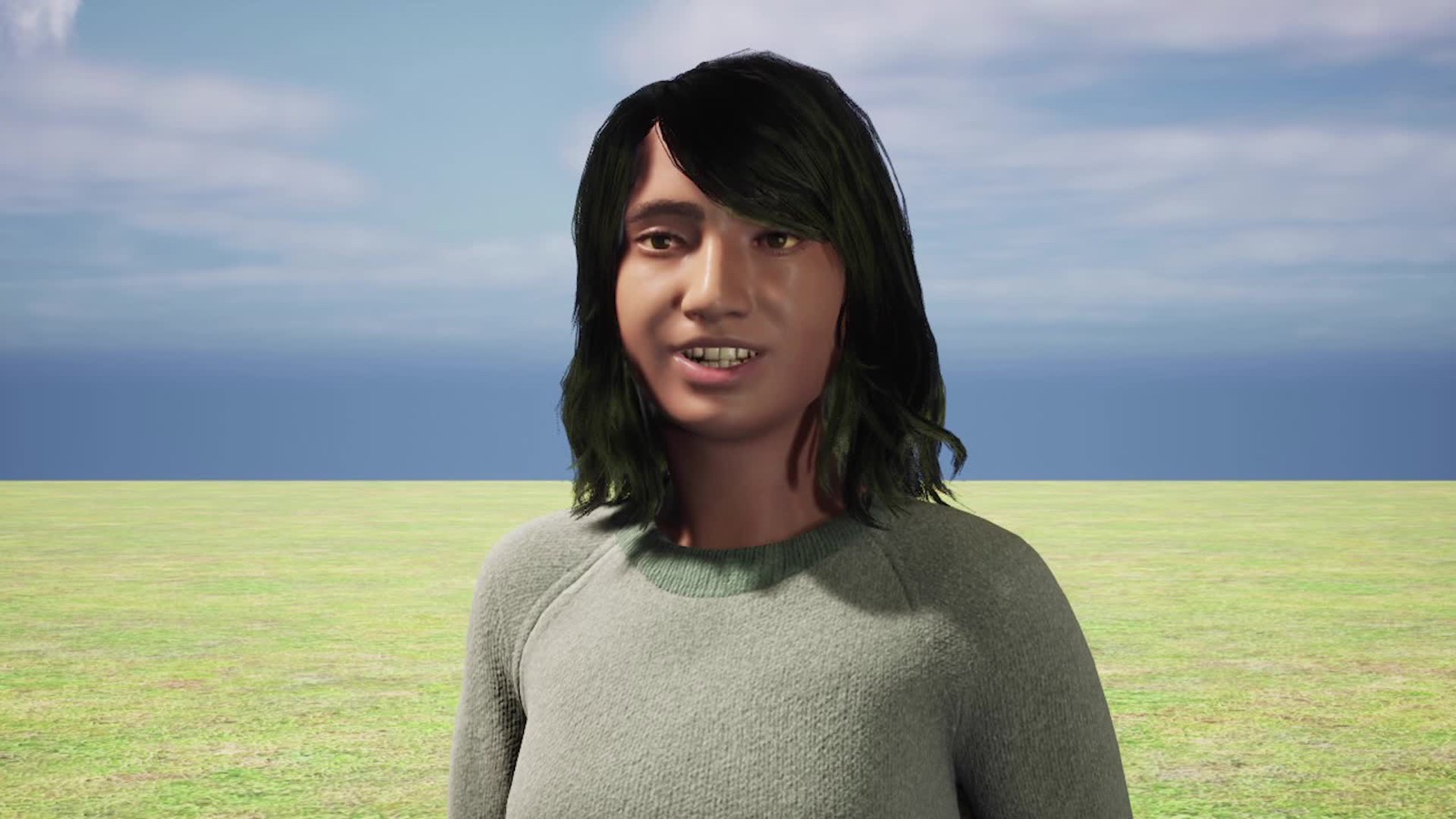
Final motion and voice test rendered with the MetaHuman in an Unreal Engine environment.
Workflow
The prototype moved through several specialised tools. Each step had to preserve enough facial structure and rigging information for the next, while still producing a character that could be directed and rendered in real time.
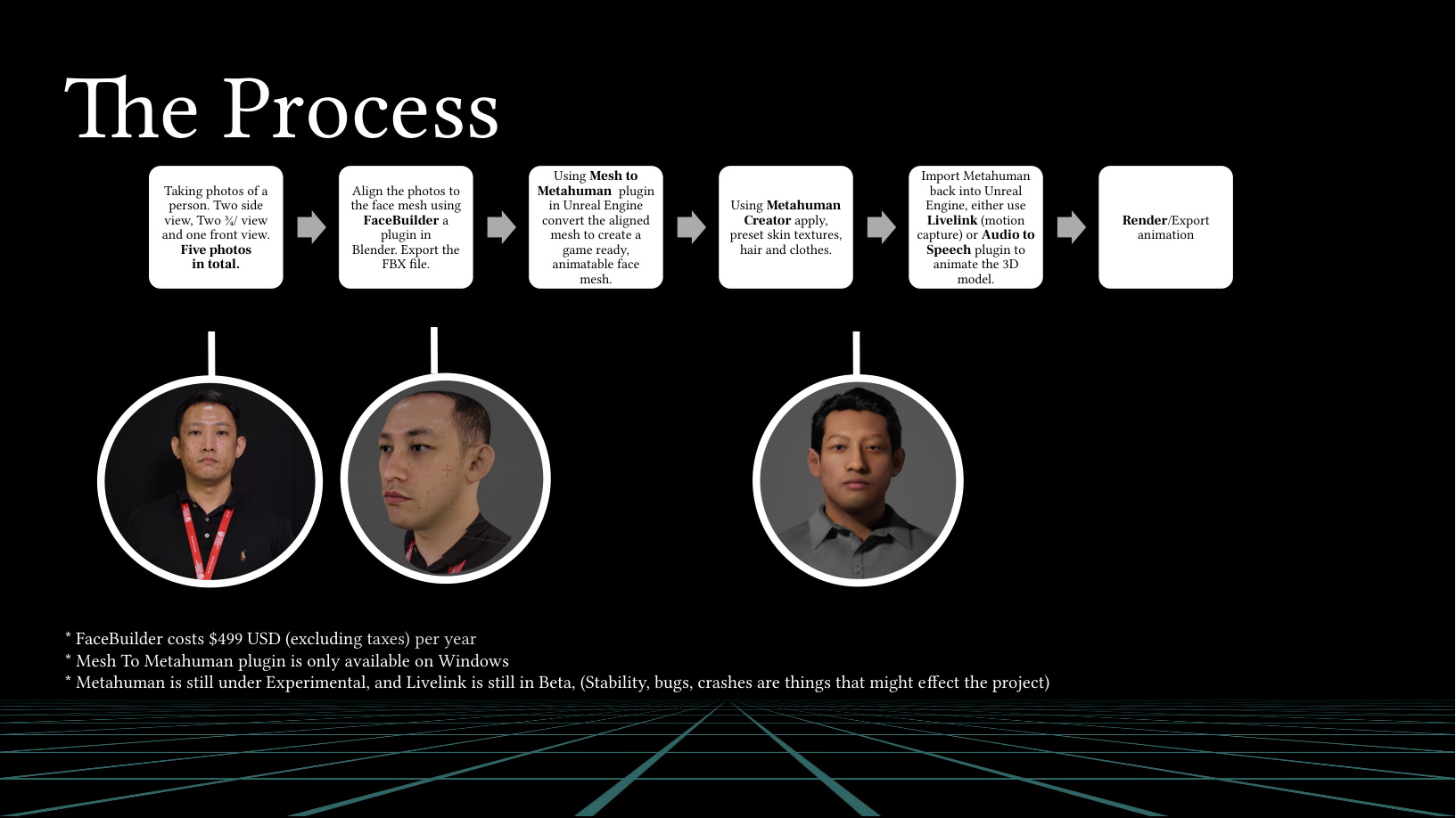
Photographed the subject from multiple angles to give FaceBuilder sufficient facial reference.
Used FaceBuilder in Blender to align landmarks and create a three-dimensional facial mesh.
Passed the mesh through Mesh to MetaHuman, then refined the character in MetaHuman Creator.
Imported the rigged character into Unreal Engine and prepared the scene, camera and lighting.
Explored facial motion with Live Link and compared it with audio-driven animation.
Combined character, movement, voice and environment into a final presenter sequence.
What I learned
The experiment showed how realistic presenters could expand animation and learning-media workflows. It also surfaced the practical cost of stitching together multiple tools, licences and experimental features.
At the time, FaceBuilder licensing, a Windows-dependent Mesh to MetaHuman step and the stability of an early toolchain all affected repeatability. That made the prototype valuable as a research direction—and an honest test of what would need simplifying before adoption at scale.