Setup comes before thinking
The team must understand the board and the method before it can focus on the problem.
Personal R&D · Generative AI · Vibe coding
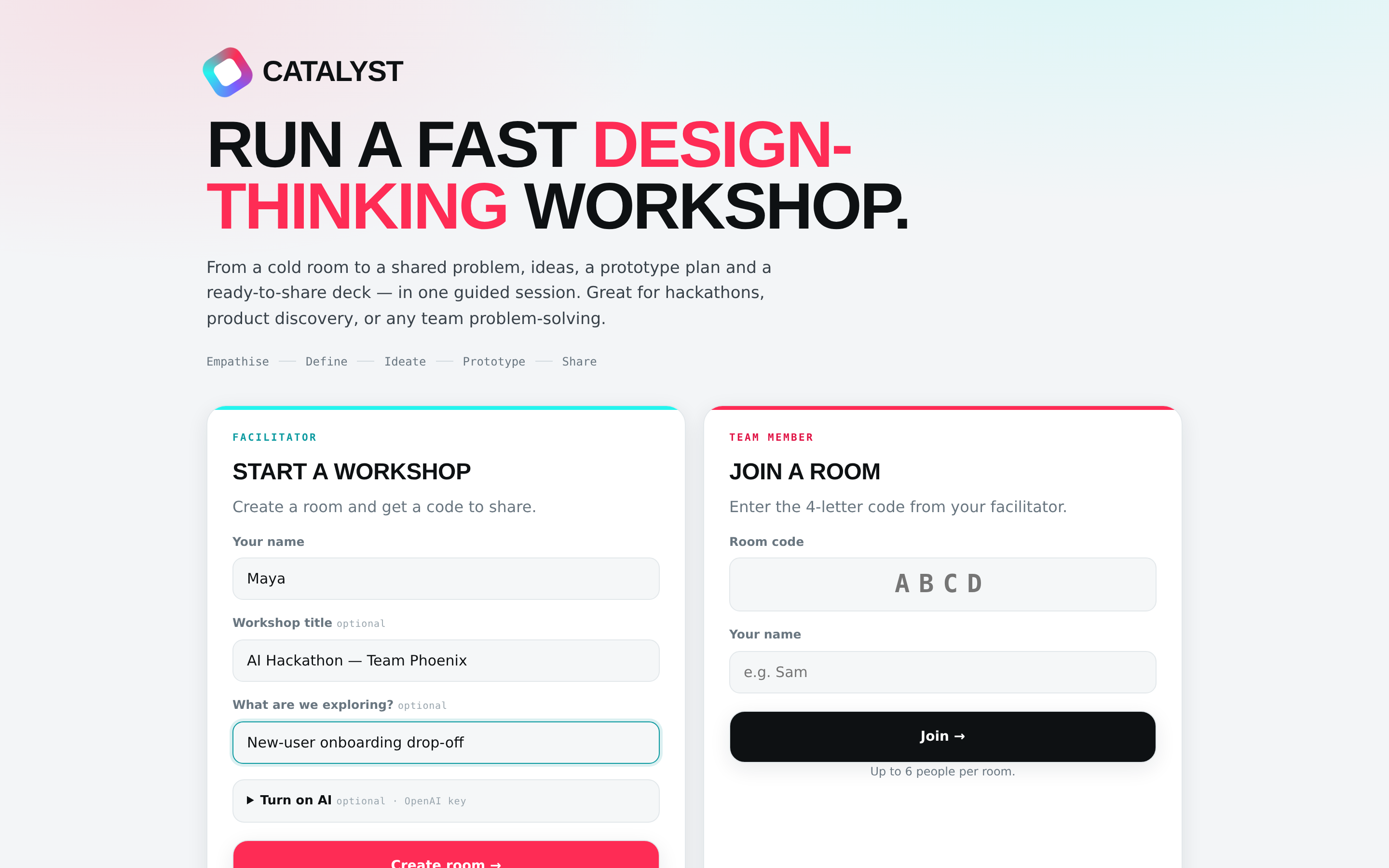
Catalyst guides a hackathon or discovery team from a blank start to a shared problem, chosen idea, prototype plan and ready-to-share brief in one live session.
Catalyst · Start or join
Opportunity
Mural and FigJam are powerful, flexible spaces for collaborative work. That flexibility also leaves the facilitator responsible for choosing a template, explaining each activity, setting the pace, moving the group forward, synthesising the wall and packaging the result. For a small hackathon team without a dedicated facilitator, that is a lot of invisible work.
The team must understand the board and the method before it can focus on the problem.
Prompts, timers, transitions and decisions compete with participating in the session.
Notes and votes do not automatically become a clear problem statement, plan or hand-off.
How might a product conduct the workshop so every person can take part in it?
This was a personal product hypothesis shaped by my experience with collaborative workshops, not a commissioned project or completed research study. The prototype now creates something concrete to test with real teams.
Product idea
Catalyst gives the room one shared path. Each phase carries its decisions into the next, so the winning problem becomes the statement the team frames, the ideas it explores and the plan it takes away.
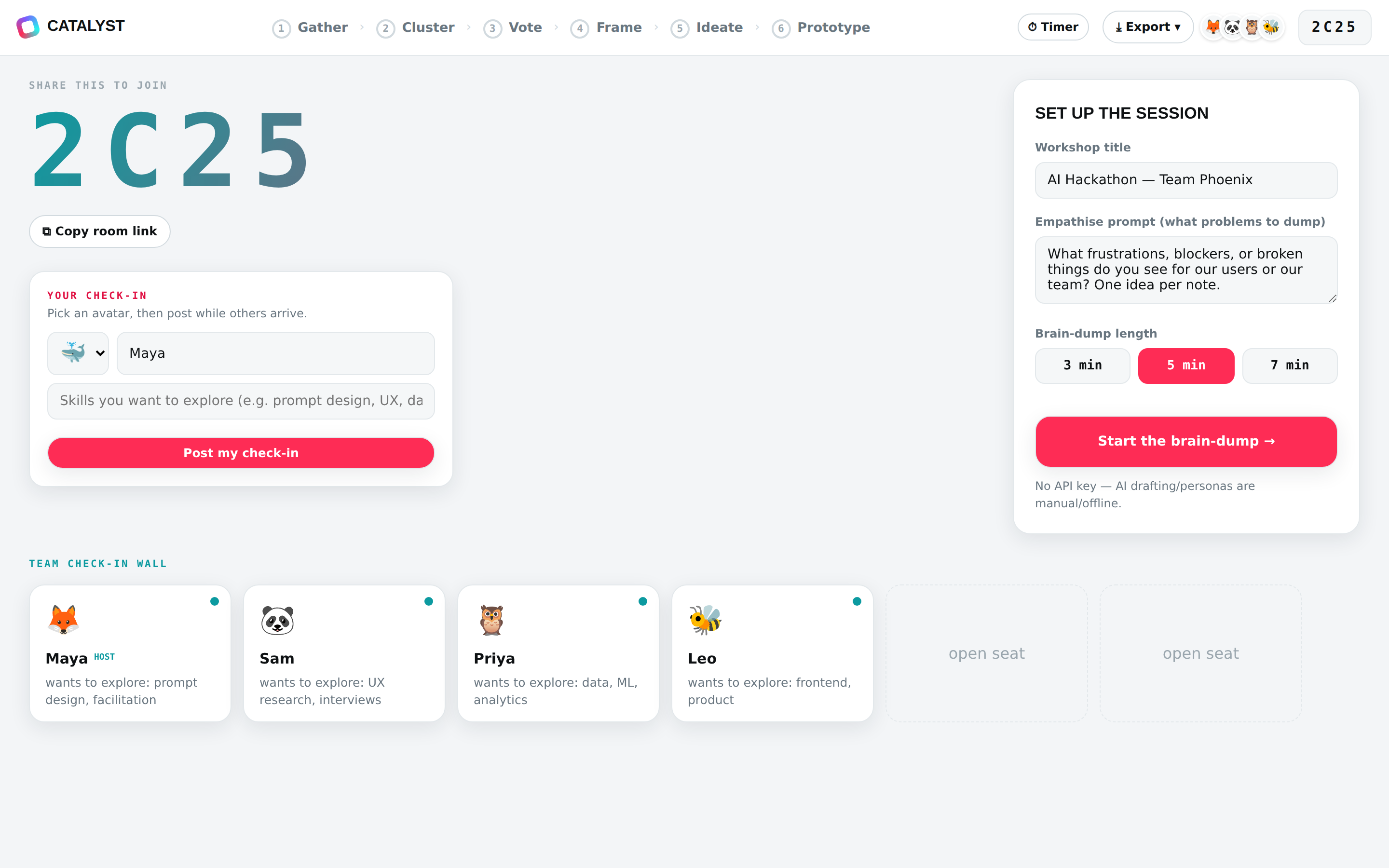
Contribute independently on a timer.
Turn notes into shared themes.
Spend stars on what matters.
Write the problem and HMWs.
Run guided rounds and choose.
Scope the MVP and assign work.
Design principles
Each phase explains the activity, shows the relevant controls and makes the next transition clear.
The first brain-dump stays blind until reveal, reducing anchoring on the first or loudest contribution.
AI can cluster, draft and role-play. The team can move notes, edit language and cast every deciding vote.
Problems, themes, votes, HMWs, ideas and scope remain connected through the final export.
The workshop in practice
Catalyst does more than place activities beside each other. It changes the rules, visibility and controls at every stage to support the behaviour that stage needs.
People add one problem per note against a shared prompt. During the timer, they see participation energy rather than other people’s content. The full wall appears together when time ends.
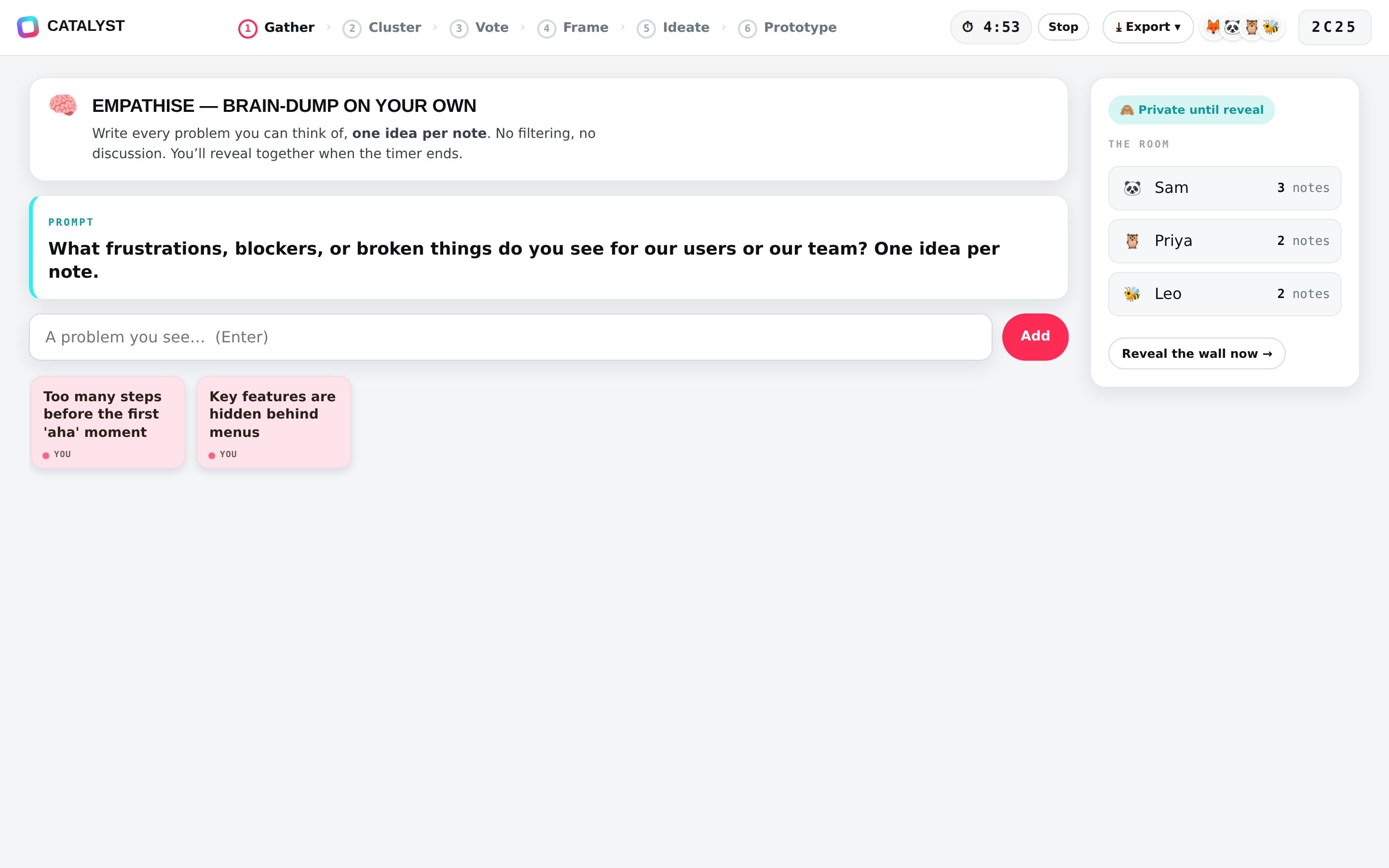
The team can drag notes into themes and rename or remove groups. An optional AI action proposes clusters with reasons, while a local keyword fallback keeps the session moving without an API key.
Each participant gets a fixed star budget. Tally changes appear live, and the highest-voted problems carry into framing rather than disappearing on the board.
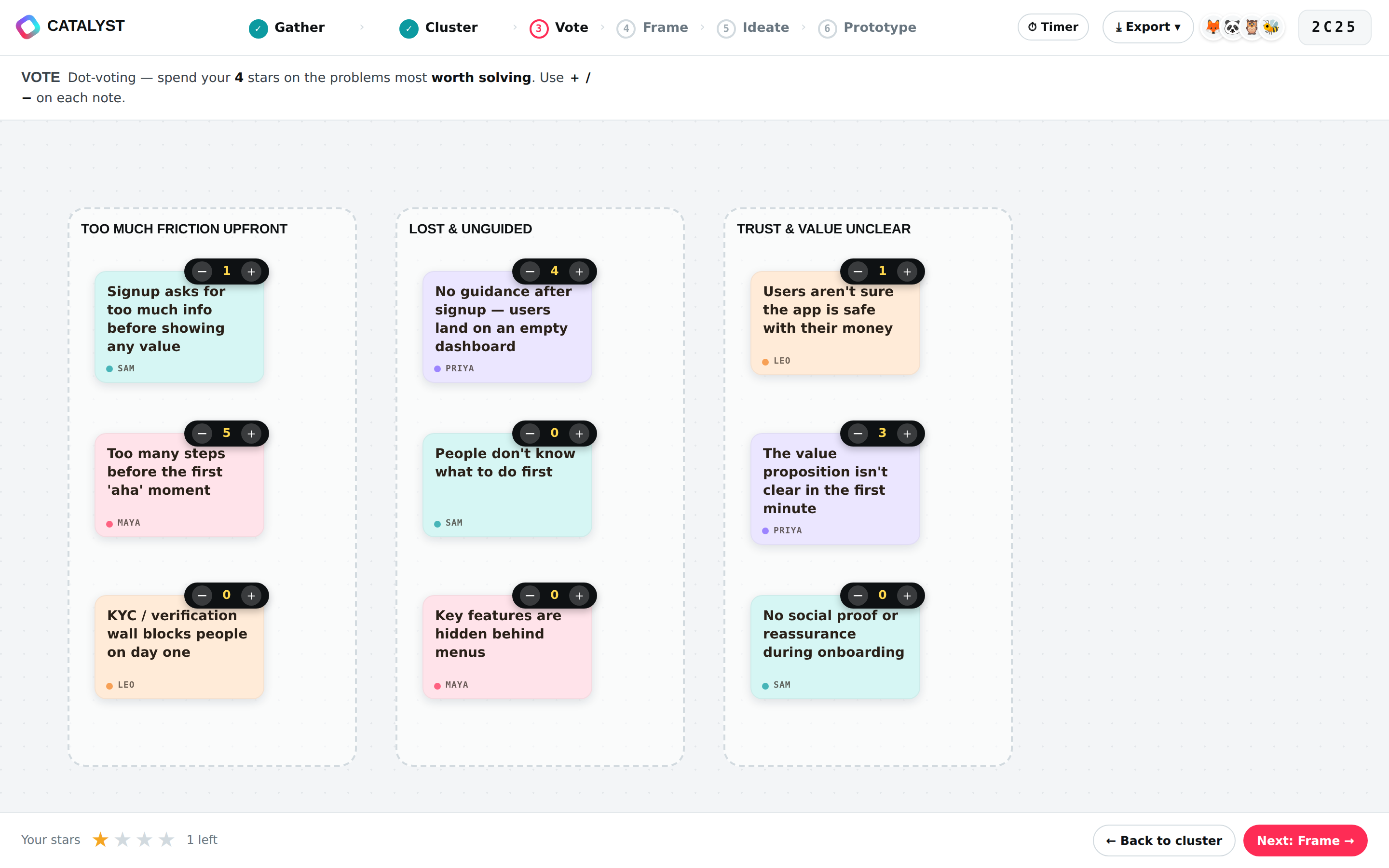
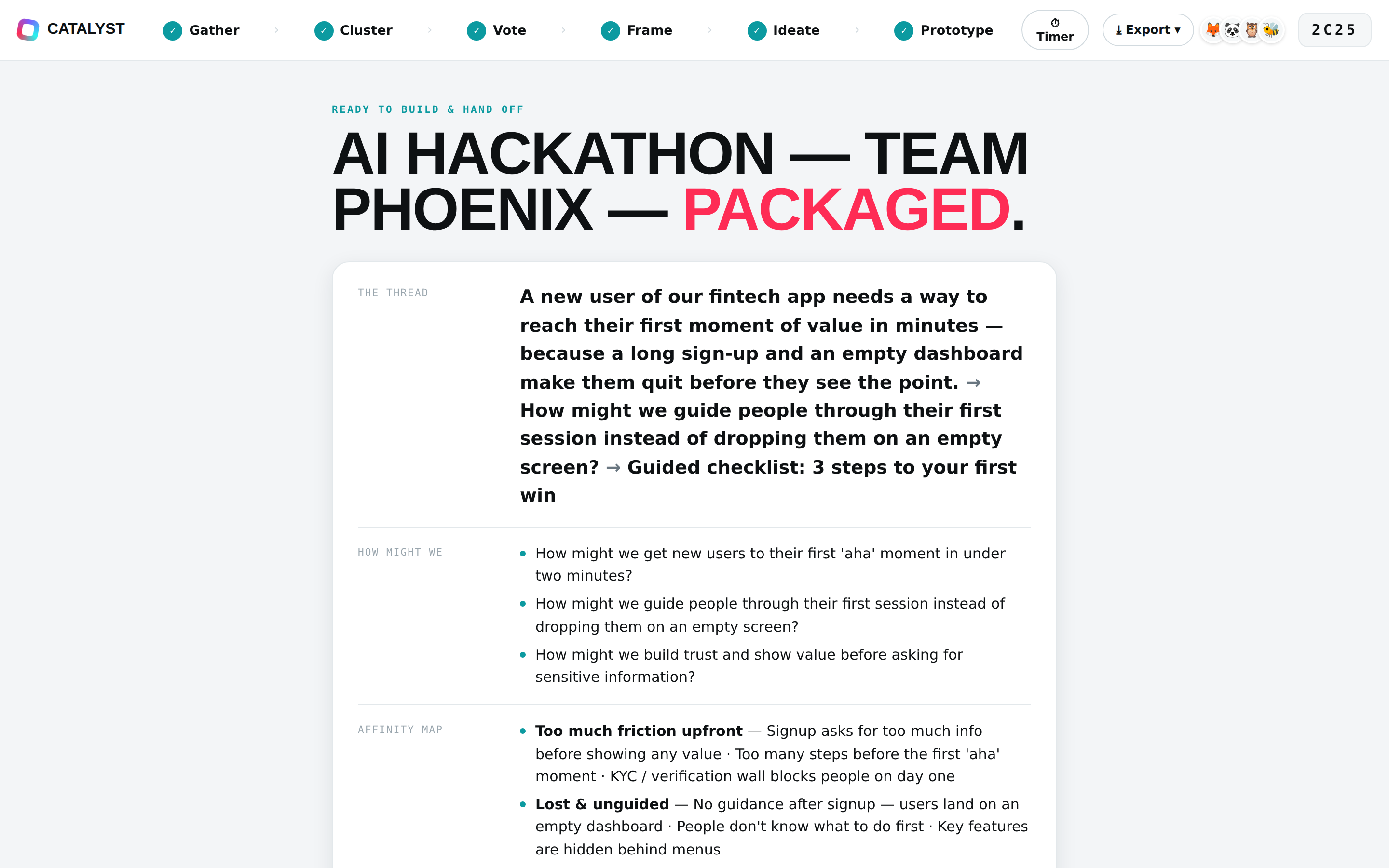
The team edits a point-of-view statement and How Might We questions together. Optional AI personas make stakeholder assumptions discussable and can be interviewed in character during the session.
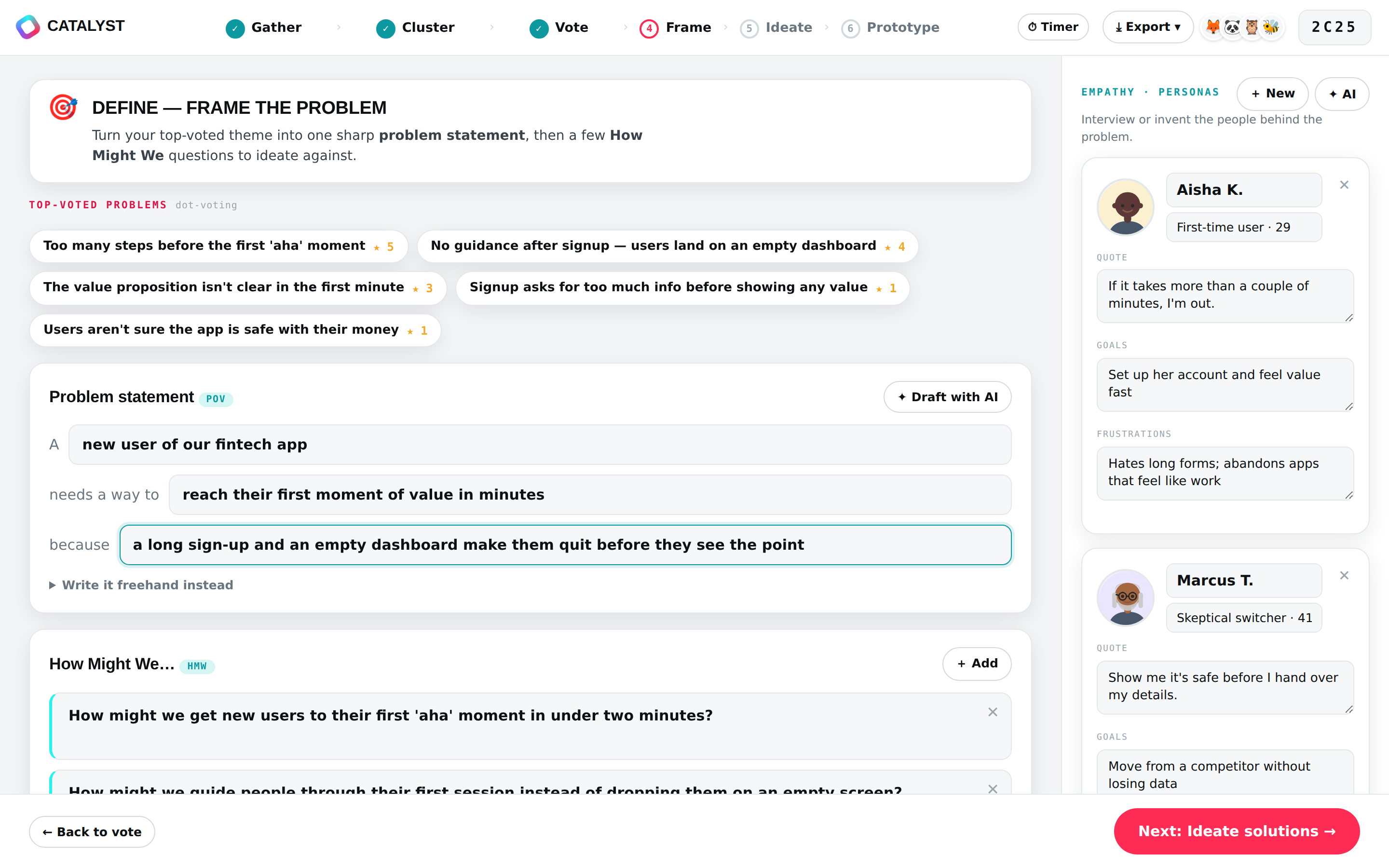
A Note & Vote sequence moves through silent storming, building on ideas and deciding. Ideas land under the HMW question they answer, then stars select the strongest direction.
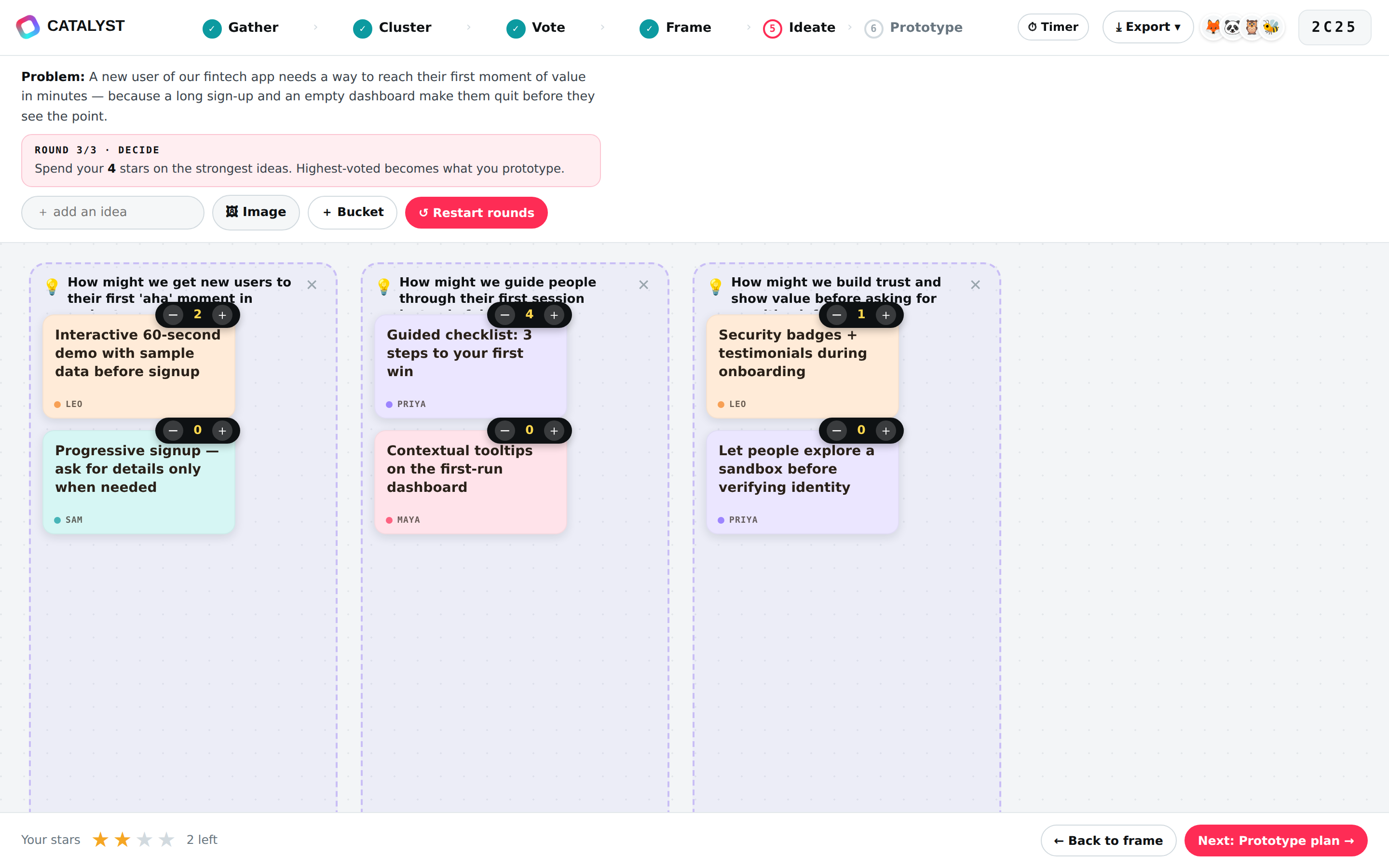
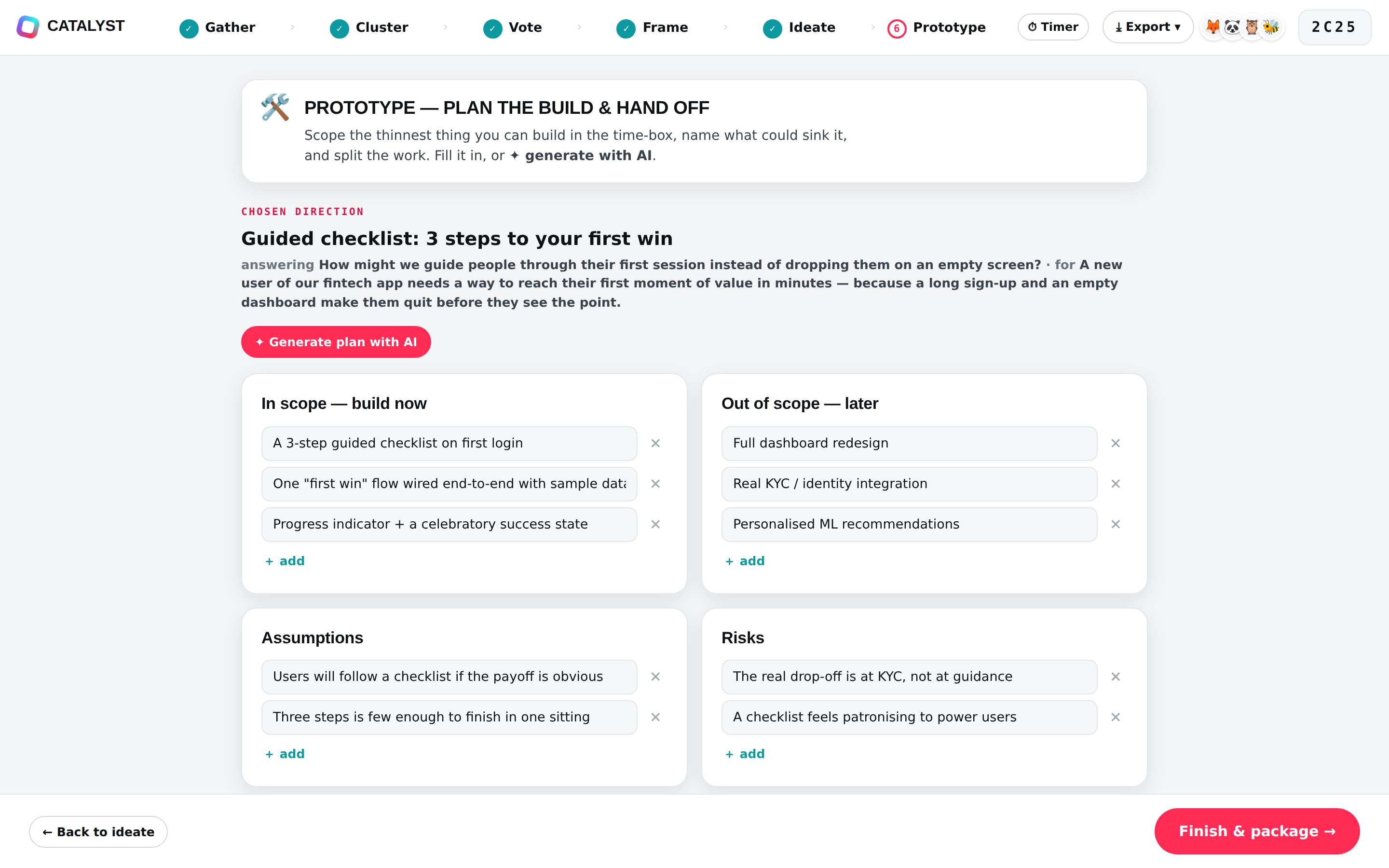
The final planning step captures what belongs in the MVP, what stays out, key assumptions, risks, success measures and task ownership. AI can draft the plan, but every field remains editable.
The final brief preserves the problem, HMW, chosen idea, affinity map, personas, top ideas, MVP scope and assigned tasks. The team can export to PowerPoint, Markdown or print-ready PDF.
Vibe-coded build
The application is completely vibe-coded. I worked from the experience I wanted, described behaviours and constraints in prompts, reviewed the output in the browser and kept refining the flow until the parts operated as one workshop.
The workshop sequence, participant rules, facilitation model, AI boundaries and definition of a useful final brief.
The Express and Socket.IO server, single-page client, AI helpers, export logic and much of the interface code.
Language, phase transitions, multi-participant behaviour, fallbacks and whether each step prepared the next one.
Vibe coding let me test a systems-level UX idea that would otherwise have stayed as a diagram. The work shifted from drawing screens to specifying behaviour: what each person can see, when the group advances, where AI helps, how humans override it and what survives at the end.
System design
The technical choices follow the experience: one always-on server keeps every participant in sync, while per-person filtering makes private contribution possible before reveal.
Participants
Live session
Optional AI
Deliberate constraints
Current trade-offs
Outcome
Catalyst now supports a complete real-time path from room creation to export. The source describes multi-client testing for the blind phase, reveal, clustering, voting, synchronisation and final brief.
Join from any device, contribute independently and see decisions carry forward.
Run a repeatable workshop without constructing and narrating a whiteboard from scratch.
Leave with a chosen problem, idea, MVP plan and a shareable record of how it got there.
This is a working personal R&D prototype, not a validated commercial product. I have not claimed time savings or workshop-quality improvements. A live pilot should measure completion rate, facilitator interventions, decision confidence, export usefulness and where teams still need human support.
Reflection
Catalyst taught me to specify a service through states, permissions, timing and hand-offs, then use generative AI to make those decisions executable. The code was AI-generated. The product point of view was mine.
Try Catalyst yourself